

Mark Dohrmann & Partners Pty Ltd
 
 
HomeServicesUseful InfoSite MapAbout UsContact us
Injury prevention / analysis
What is ergonomics? How to sit at a computer Useful applications Injury prevention / analysis » Back strain » Overuse strain (CTDs, MSDs) » Slips, trips and falls » Aches and pains at work » Using the NIOSH equation Legislation - safetyOther informationUseful linksCoursesEmploymentProfessional Societies

Slips, trips and falls

Sixteen tips to help you better assess liability
Mark Dohrmann
Consulting Engineer and Ergonomist
Melbourne, Australia

Claims against occupiers for damages arising from slips, trips and falls are a common area for plaintiff practitioners. The writer (not a lawyer) has come to appreciate some of the legal difficulties which can arise. There can be complexities and ambiguities in the most innocuous fall, and the technical expert also has to unravel them in assessing liability. Think about it - there are many reasons why people fall over: for example, straight out slipperiness; or not seeing the step; maybe giddiness or the effect of substances; unexpectedly losing one’s stride; getting the wrong visual “cues”; being knocked; overbalancing. There are more. 

The purpose of this paper is to outline certain issues which may need consideration, with a view to assisting practitioners when they take their instructions. 

1. What actually happened?
Firstly, try and establish whether the fall was a trip, a slip, a stumble, or perhaps something else. Since there are various explanations for why people fall down, get this basic point cleared up at the outset. A client might unwittingly mislead you into assuming that the instigating cause was a slip (due to lack of traction), when in fact it might be the irregular geometry of an unusual step which caused them to lose their stride and fall. The issues surrounding these alternative explanations are quite different, as too are the follow-up analyses. 

Accurate and patient reconstruction of the few seconds leading up to the fall – inasmuch as the client can remember them – can be more than useful. Naturally, the client is not necessarily your best witness – after all, they are the person who fell over. Nevertheless, do what you can to explore where they came from, the direction of their fall, whether it was their feet (or one of their feet) which went first, where they landed, how far they fell. 

We always start with this area of enquiry, and it is never a waste of time. 

2. Footwear:
Do they still have their shoes or boots?
Who paid for them? Ask about their condition, their fit, their age, and the composition of the soles. Heel height (and size) is also sometimes relevant – especially for heel-trips. One aim in evaluating the shoes is to eliminate their contribution to the fall, if possible. Another is to say what better footwear an employer could or should have provided. 

3. What could the client see before they fell?
We all adjust our gait unconsciously while walking. Falls are often brought about where the person cannot properly see or interpret what lies before them (eg a change in surface, something evidently slippery, a change in level). Therefore, enquiries also need to be made into the lighting (whether daylight, moonlight or artificial light – what light was available? Which light(s) were working, and on? How dark was it?) Get some objectivity about light levels by asking if it would have been possible to read a newspaper or a telephone book at arm’s length. This can be used to deduce approximate lux (illumination) levels, which is then assessed against Australian Standards. 

4. What were they looking at?
People walking through carparks or crossing streets are less than likely to be looking at or near their feet (they should be looking out for vehicles) – thus, innocent trips on low projections or height discrepancies become more likely. Was their view blocked by anything at the moment of truth? In shops, merchandise is usually set out to entice attention (away from the feet). This underscores the risk of relatively small tripping hazards, and can shift the burden of liability. 

5. Were they wearing glasses?
If so, how recent is the prescription, and were the glasses appropriate for walking? This is another potential issue you will want to eliminate if you can. 

6. Obtain compass directions:
Knowing north and south in reconstructing the incident may help define whether there were any shadowing effects which assisted (or hindered) the detection of a lip or change in gradient. The time of day of the incident should be noted (there are charts which can give precise information about sun angles and shadows on any date at a given latitude). 

7. Check for medicine:
Certain prescription drugs (and combinations thereof) can cause giddiness and may explain some falls, particularly amongst the elderly. Although I have never been cross-examined on this point, it sometimes pays (if there is any doubt about explaining the fall) to check with the client for any drugs they may have taken, and if necessary, to run this information past a pharmacist. Alcohol consumption obviously needs checking. 

8. Get the big picture:
Clients will often send a relation back to where they fell to take photographs, and I have seen plenty of close-ups of 20 cent pieces or matchboxes propped against disruptions in footpaths or cracks in the ground. These are usually helpful, mainly to preserve the evidence; however, photographs ought also be taken from several directions and from several meters away, to illustrate the position of trees (and of boundaries between occupiers); of warnings or signs; of service pits, drain holes and openings into gutters (a disrupted footpath opens questions about who might have done work here – gas, phone, electricity, water, council? Ask your client to also photograph or record details of any signs which suggest ownership, building management or occupancy details. 

Where photographs are taken of stairs, a shot should be taken to show what the person could see, looking down – are the steps’ noses clearly visible? Does the pattern of any floor tiling or carpeting obscure the edges or level changes? 

Useful preliminary expert advice can often be rendered on the basis of decent photographs which show details of say, twenty meters around the spot where the fall occurred. The photographs should include a set which retraces the journey into the fall for the half-minute beforehand. 

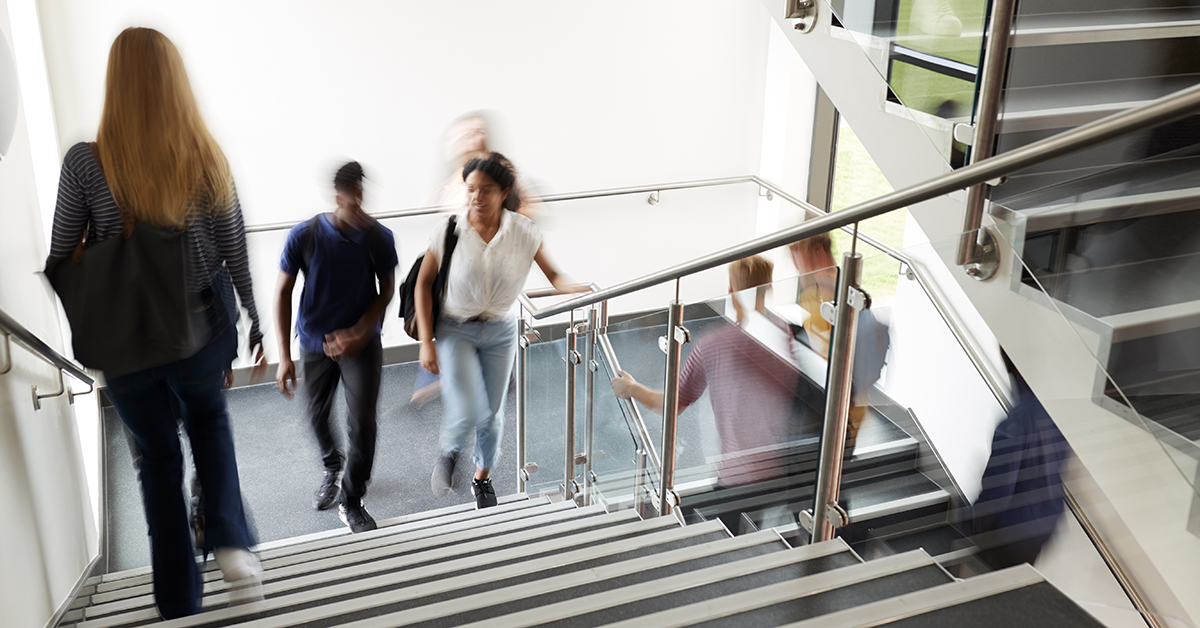
9. Steps and stairs
Check the dimensions: steps and stairs are regulated by the Building Code of Australia, which is quite prescriptive about the heights and depths of steps, the specifications of handrails (and when they are required) and the treatment of nosings. Relevant step heights need to be accurately measured, and also the “going” (this is the horizontal distance from the nose of one step, forwards to the next). The clear width of the stair (from one side to the other) will establish whether or not whether handrails are called for – often omitted in short-rise pairs of steps, such as in shops, a frequent site for accidents. Establishing non-compliance is usually more than helpful to the claim (provided the fall can be pinned on the non-compliance); authoritative disclosure may also prompt your defendant to turn his attention to third-party recovery. 

10. Was it really slippery?
Most practitioners will have heard the phrase “co-efficient of friction”. This is a measureable quantity which defines the relative slipperiness between a pair of nominated materials. If a fall seems to have been caused simply by the pure and absolute slipperiness of a surface (regardless of the shoes worn), then the properties of that surface may need to be measured. There is an Australian Standard which prescribes the method to be used for wet and dry circumstances respectively, and it is exacting. Special equipment is needed. Dry friction is measured with an electronic instrument known as a “Tortus”: after calibration, it creeps slowly across the test area, producing a graphical print-out giving the dynamic coefficient friction for the whole path.  
Wet tests are done with a precision-built pendulum, which simulates heel strike by allowing an artificial foot fitted with a particular kind of (expensive) rubber fitted to the heel, and measuring the energy absorbed over a fixed drag length.  

If, however, the slip was caused essentially by a person walking unexpectedly from one dry area to an adjacent slippery spot, only the relative difference between the two areas (wet and dry) may need to be established. An argument can then be developed to say that that the slip is attributable to the change, not to the absolute (measured) slipperiness of the problem area. In this latter case, investigation and measurements are a good deal simpler and less expensive, since complex equipment is not needed.  

11. Was there a cleaning agent used?
If a floor has been cleaned or polished with some substance, the properties of that substance may need to be drawn into the investigation. We may need to know whether the cleaning or polishing compound used was (according to the manufacturer) appropriate for this application, and in particular, any directions for its application and use. Your client will sometimes be in a position to obtain this information, and even a sample. We have seen wins where it was found that the defendant (a large corporation) had failed to follow proper directions for laying down the polish, and of then buffing it back to a condition where it would regain its safe, non-slip properties. The information came through patient enquiry of the chemical suppliers. 

12. How vigilant were the occupiers?
A common supermarket defence is claiming that there was a system of regular patrol and inspection by employees, who are presumed to have been instructed on what to look for and what to do (if they see a spill). The truth is that this responsibility is often left to young and untrained workers. Their diligence in monitoring for spillages can be tested by sticking down a small “Post-It” label at the spot where the fall occurred, then waiting to see how long it takes to get removed. Incidentally, larger stores invariably raise an incident report. Ask for this if matters get that far, as well as for any relevant training notes given to employees. 

13. Beware of the ankle roll:
In Ghantous vs Shire of Singleton recently, it was found that a 50mm (2”) height difference between the edge of a footpath and the side of naturestrip – where Mrs Ghantous rolled her ankle and fell when she moved aside to avoid an oncoming pedestrian – was something which she should have seen. Don’t be put off, however, if the height difference which caused your client’s grief is much less than 50mm, because – once again – assessment depends on the circumstances, and on how they actually fell. Take, for example, lip height. We have given evidence in a matter where an elderly lady caught her heel on a 3mm-high lip on a bus step as she was exiting. The lip was blunt, not angled, and (as the elderly are prone to do) she had a shuffling gait. The risk was foreseeable (to the Defendant), and preventable. She succeeded. 

14. When was the cleaning last done?
Dust on timber floors produces surprisingly high levels of slipperiness, so the propensity to attract or allow the entry of dust (and the frequency of proper cleaning) is of interest. So too are the kinds of brooms and mops available or actually used. 

15. Was there anything or anyone else responsible?
Ask the client what they were wearing (in case their clothing contributed in some way to the fall). Were they alone? Were they carrying anything (which may have made it more difficult to grab a handhold in time); is it possible that they were knocked or bumped by anybody? 

16. Where did the banana skin come from?
Airconditioners may drip water at entrances. Fridges can leak. People drop papers and rubbish. Bins overflow. Kids come in from wet playgrounds and run across mats which might not dry their soles before they hit the lino. If there was a mat, was it big enough to absorb moisture, and flat enough to avoid tripping? Although any such temporary contributions to the fall may have long gone, indirect evidence may assist, or may permit inferences. 


Don’t forget to ask if there were any stains found on the clothing, likely to have been picked up in the fall. Lastly – and importantly – was this the first time your client had walked through this spot? If not, when was the last time? Under what circumstances? The Defendant will pounce on any prior “experience” with the location and situation, so find out what you can to enable that argument to be met. 

Clients will sometimes be surprised that an interview about a fall can become quite detailed. An overly-zealous client determined to be compensated may be given through this process pause for prudent reflection. More to the point, a comprehensive report seen to competently address a full range of possibilities, and which deals objectively with each of them, is more likely to carry weight with your opponent than a vague description based just on what your client told you. A soft claim will invariably be met by allegations that your client was not looking out properly. It is better to assess this point along with these various other factors before you fire your best shot. 


Mark Dohrmann is a Melbourne-based consulting engineer and ergonomist, practicing generally in personal injuries areas since 1977. He has a website with further useful information about safety and ergonomics at www.ergonomics.com.au. Email: .

 
Site by DigitalCreative.com.au